A municipality has an outdated wastewater lift station. The pumps have reached the final stage of their life and the controls are dated, as well as the access hatch is damaged. Although the concrete wetwell is solid structurally, it requires to be upgraded.
Do you think the station should be demolished and rebuilt? Not necessarily. It is more important to ask if the infrastructure in place can support modern pumps without compromising future capacity and reliability or maintenance access.
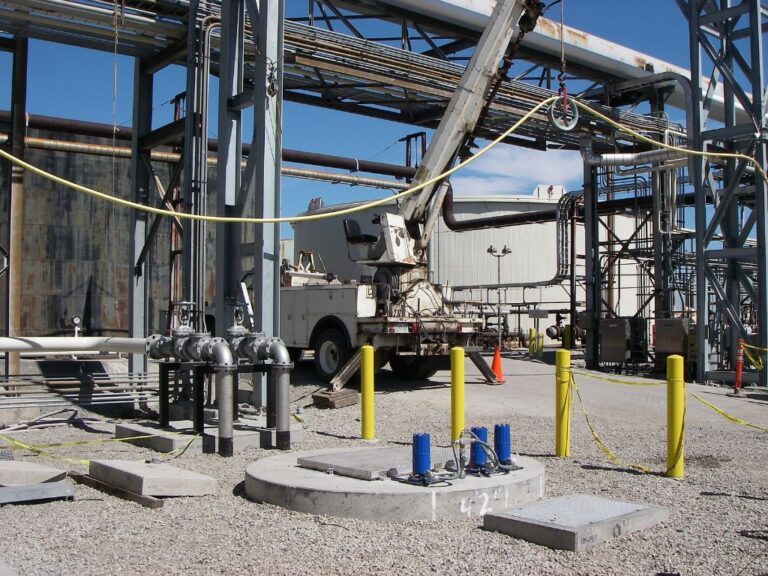
Image credit: romtecutilities.com
A carefully engineered pump station retrofit can preserve valuable infrastructure while replacing components that no longer meet operational requirements.
Start with the Structure That No One is Trying to Replace.
The wet well is often one of the more expensive and challenging components to replace as it is located underground, linked to existing piping, and essential to wastewater collection.
If the concrete structure is usable, its retention could decrease excavation and construction work.
The deterioration of the area close to the access hatch could make this difficult. Romtec Utilities has identified wet-well hatch replacement as a crucial retrofit. It could be more durable to repair the top slab instead of attaching a new hatch to a deteriorated concrete. This can increase access to the structure and prolong its utility, without having to replace the entire structure as well.
A More Powerful Pump Modifies the Engineering
Let’s say a residential area has seen a significant increase in population since the original lift station was installed. The existing pumps might not be able to cope with increased wastewater flows.
The modernization of a pumping unit could include more horsepower, but this cannot be done without considering the surrounding system. Pumps with higher horsepower may require modifications to the discharge elbows and pipes as well as electric controls, valves and other parts.
Engineers must also think about the hydraulic requirements of the system. This includes flow and the total dynamic pressure. A larger pump installed without taking a look at these requirements could cause operational problems rather than solving them. The ability to plan future capacity at the time of initial design makes future expansion significantly easier.
Keep the Wastewater Moving During Construction
A retrofit to a wastewater pump station creates a challenge that regular equipment replacement projects may not be able to overcome: the station may need to remain operational throughout the construction.
Even when contractors are working the wastewater still flows in. According to the report, a temporary bypass pumping system is necessary to maintain service as the equipment that is in use is removed or new parts are installed.
Romtec Utilities faced this kind of challenge at the Federal Law Enforcement Training Center in Brunswick, Georgia.
The project involved replacing two outdated wastewater lifting stations, and maintaining operation at this facility. Specific engineering for the site as well as packaged replacement systems and bypass pumping techniques helped make room for the station’s footprints and operational demands. This example demonstrates how the order of construction is important to consider prior to installation.
When replacement is the better option
Not all stations are suitable for rehabilitation. If the sewer lift station needs to be replaced due to a seriously degraded well, structural issues or major changes in the hydraulic requirements, it could be better to replace than alter.
It is vital to take into consideration structural requirements, equipment compatibility and accessibility to construction as well in the long-term requirements for operation. Romtec Utilities begins retrofit and replacement projects by determining which components will be retained and which require replacement.
The firm will then develop custom-designed engineering plans, budget estimates, and preliminaries of designs. Prefabricated parts can also help to organize installation and decrease some building requirements that are required on-site.
The Project Doesn’t End When the Pumps Start
A modernized lift station must be able to function as an integrated system. Before returning a lift-station to normal service, start-up tests, commissioning as well as verification of the equipment are essential to confirm that all pumps, controls, and the related equipment function in accordance with the specifications.
Training and manuals for operators are equally crucial. Prior to taking over the responsibility of an entire station, the personnel in charge of maintenance must understand new equipment, procedures and also the documents.
Retrofitting successfully preserves the infrastructure while still addressing the limitations which forced modernization.
Municipalities and property owners have to think beyond repairs that are immediate. The most successful initiatives are those that incorporate new equipment into existing structures to keep essential services running even while construction is in progress. They also prepare the pumping system to continue running for a long time.