You might have wondered the reason behind why a specific test was selected. Each provides images of what’s going on within the body. So why aren’t they interchangeable, then?
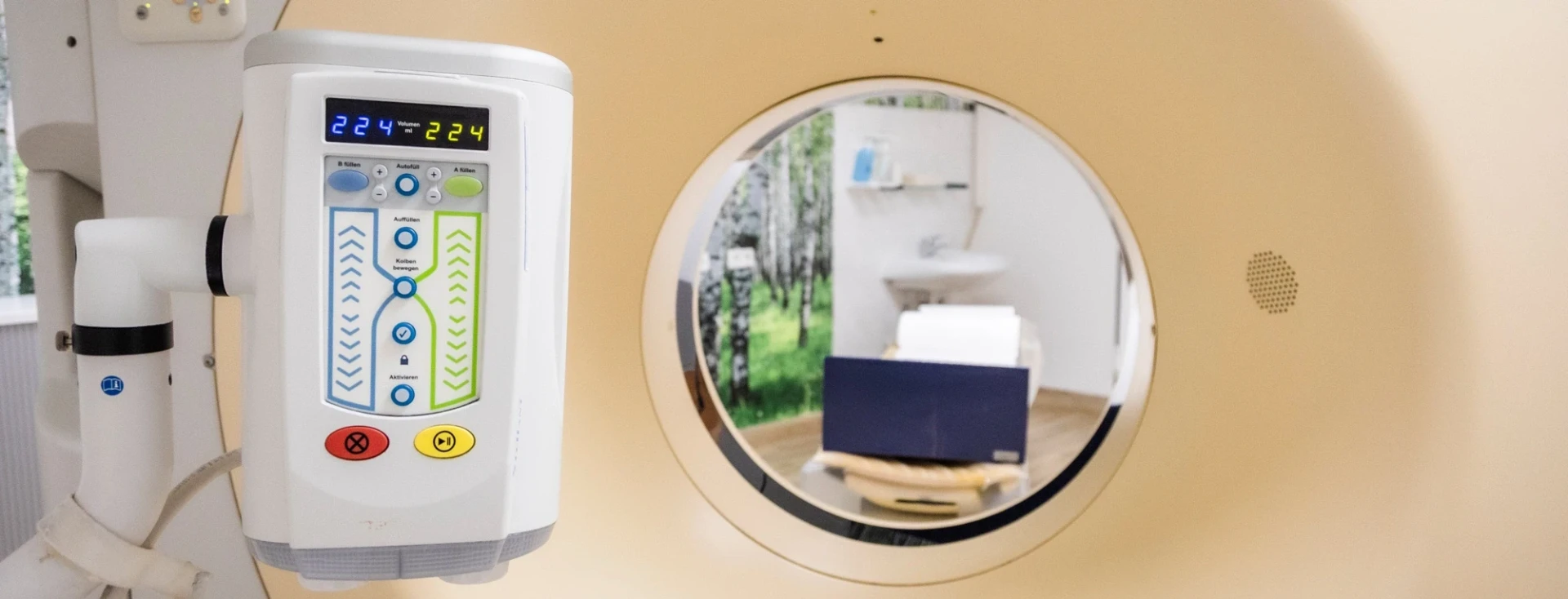
Image credit: diagnostikzentrum-wolfsburg.de
Modern diagnostic imaging has become much like an instrument box. Different technologies provide information in a different manner and the best technique to employ depends on the part of the human body being examined as well as the query that has to be addressed. The Wolfsburg Diagnostic Center offers a range of imaging techniques to complement tests with various diagnostic requirements.
MRI Examines the body with no radiation.
Magnetic resonance imaging (MRI) makes use of radiofrequency and magnetic fields to create detailed images. It does not utilize radiation that is ionizing. MRI is particularly helpful for visualizing many types of organs, soft tissues, joints, and other internal structures. A patient suffering from a joint issue, for instance might require information that is not available by a standard X-ray.
The Wolfsburg Diagnostic Center provides prostate MRI and full-body MRI examinations. These applications utilize MRI’s capability to provide precise images, without exposing patients to radiation ionization.
CT produces detailed cross-sectional images
CT approaches imaging in a different way. CT makes use of X radio waves as well as computer processing to create a cross-sectional view of the body to produce precise images. CT creates a slice-by-slice picture of the anatomy inside providing doctors with a different method to answer certain medical queries.
The center utilizes low-dose CT, a modern technology that reduces radiation exposure in order to gather diagnostic information. CT imaging is also beneficial for treatment. Periradicular Therapy, also referred to as PRT utilizes CT guidance to guide injections of nerve tissue that has been irritated.
The Familiar X-Ray Still Has an Important Function
Technology hasn’t rendered traditional radiography obsolete. Digital X-ray diagnostics are able to provide pictures quickly and are a necessity for many examinations, particularly when physicians need to evaluate bones and structures. Modern digital systems also use less radiation than traditional methods. For more information, click here radiologie Wolfsburg
The most sophisticated test may not always be the best. It is important to choose technology which is most effective in answering medical questions rather than the most recent equipment.
Breast Imaging has its own specific technology
Mammography was specifically developed to diagnose breast cancer. The Wolfsburg Diagnostic Center also offers 3D mammography (also called tomosynthesis) in addition to traditional mammography. This technology creates multiple images that can be converted into a view of breast tissue. It is crucial to utilize special imaging since different areas of the body pose different difficulties for diagnosing.
The old image may transform into a more efficient
A current scan provides information about the body today. Comparing a previous scan with an upcoming one could be equally valuable.
If earlier scans and results are available, medical professionals can evaluate the evolution of their findings over time rather than taking the current exam in the absence of. This is why it is recommended that patients are encouraged whenever feasible, to bring in previous medical imaging findings and images to appointments.
Understanding the process aids patients understand the technology better.
The Wolfsburg Diagnostic Center The Wolfsburg Diagnostic Center combines MRI and CT with digital X-rays 3D mammography and image-guided therapies. It is focused on the communication of patients and their organization.
Videos and patient-specific explanations are available to help patients better understand medical procedures. The short waiting time and the coordinated scheduling are an integral part of the clinic’s procedure. Modern diagnostics rely on sophisticated technology, but scanning shouldn’t be an obscure technical process.
Knowing the purpose of the particular examination and the outcomes they can anticipate will allow patients to be more confident. They might also realize the latest medical technology simpler to comprehend.